
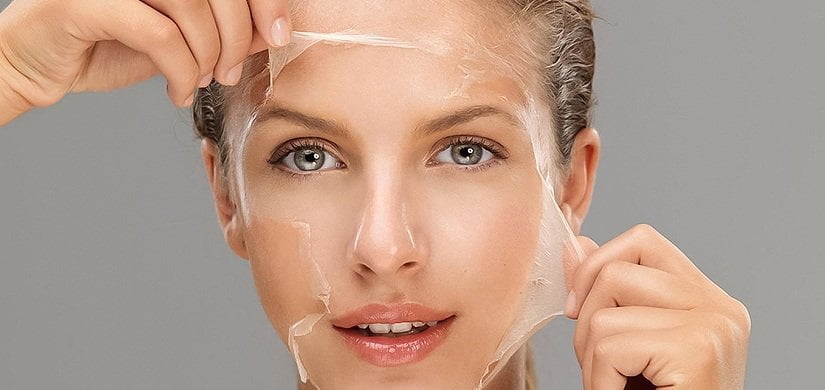
Acne treatment with chemical peels
Acne vulgaris is a very common inflammatory disease with a lifetime prevalence of nearly 80%. Acne is associated with depression, anxiety and low self-esteem. Untreated or poorly managed acne often has major effects on a patient's quality of life and has associated socioeconomic and health care costs. This emphasizes the importance of an effective and cost-effective approach to treating acne.
Understanding the multifactorial pathogenesis of acne is essential to developing a treatment plan. There are different methods for treating acne, such as reducing sebum, reducing adhesion between the cells of the stratum corneum, reducing the number of bacteria with antibiotics, treating hormonal problems, and so on. Acne can be treated in stages, with topical antibiotics and mild retinoids used for mild acne, and more severe treatments for more severe cases. Chemical peels are an effective and tolerable adjuvant treatment for acne and its scars. A low-cost and reliable method with controlled side effects that in cases of severe acne is better to use after the end of the medication period.
Why chemical peels are good for treating acne and scars?
In general, chemical peels work by controlling skin damage and enhancing skin and epidermal regeneration. This mechanism makes the action of chemical peels suitable for the treatment of active acne and its scars. Many chemical peels have keratolytic and commodolytic effects, which are especially useful for non-inflammatory comedonal acne. Chemical peels also help reduce the size of the pores and increase the absorption of other topical acne medications with controlled damage to the skin. Although chemical peels are an excellent adjunct in the treatment of mild to moderate comedonal and inflammatory acne, chemical peels are not suitable for the treatment of severe inflammatory or nodular cystic acne. Severe inflammatory or nodular acne should first be treated before starting a peeling regimen with other medications.
Exfoliating agents and patient considerations
The depth of exfoliation depends on the type of exfoliator and the concentration used, the skin preparation technique and the time of skin contact. Superficial chemical peels cause controlled skin damage, which is mainly confined to the epidermis, and the depth of their penetration creates the least discomfort for the patient. Salicylic acid (SA) (5% - 30%) and glycolic acid (GA) (20% - 70%) are the most common drugs used to treat mild to moderate comedonal acne and inflammatory acne. Other agents used in chemical peels include lactic acid (LA), mandelic acid (MA), trichloroacetic acid (TCA) and ginseng solution (JS).
What are the chemical peels to treat acne?
Salicylic Acid
SA (salicylic acid) is a beta hydroxy acid commonly used to treat acne vulgaris. Its strong keratolytic and commodolytic properties make it especially suitable for treating acne. This acid is suitable for exfoliating people due to its lipophilic properties, it is suitable for exfoliating the surface layer and reducing sebum in the skin. This acid reduces the number of inflammatory and non-inflammatory lesions in patients with active acne. For exfoliation with this acid, the most common concentration used to treat acne is 30% SA, which is applied to the skin every 2 to 4 weeks (depending on the doctor) for a total of three to six sessions. If less concentrations are used, the number of sessions needs to be increased. The recovery period of this peeling is between one to three days and the complete repair of the skin takes between one week to a maximum of 10 days. Exfoliation with SA is very safe even in patients with dark skin because of its superficiality.
Glycolic Acid
This acid in particular reduces the adhesion between the cells of the stratum corneum of the epidermis and also has antibacterial effects against P. acnes. Unlike salicylic acid, GA glycolic acid needs to be neutralized with an alkaline solution to stop the exfoliating effects. It is commonly used to exfoliate at a concentration of 30-50% GA for 3-5 minutes every two weeks for three to six sessions. Higher concentrations run the risk of complications. Of course, its side effects are usually limited to transient burning, so it can be used even for pregnant patients.
Trichloroacetic Acid
TCA is a crystalline inorganic compound that causes controlled skin damage by denaturing epidermal proteins. It is used in higher concentrations for rejuvenation and at a concentration of 25% TCA for 4 sessions with an interval of 2 weeks between sessions has the same performance as salicylic acid for the treatment of acne. The use of this substance, especially in high concentrations for people with dark skin can potentially cause pigmentation problems such as hyperpigmentation, so it is better to be careful when using this acid.
Jessner’s Solution
JS is a exfoliating solution consisting of three ingredients (14% SA, 14% resorcinol, and 14% LA in 95% ethanol). This solution is usually used to increase the penetration and greater effectiveness of medium depth peels, but can be used to treat acne vulgaris alone. This solution is well tolerated and does not have many side effects, for example pigment problems are very rare. This solution is used every two weeks for three to six sessions. In cases where the patient is allergic to resorcinol from a place