
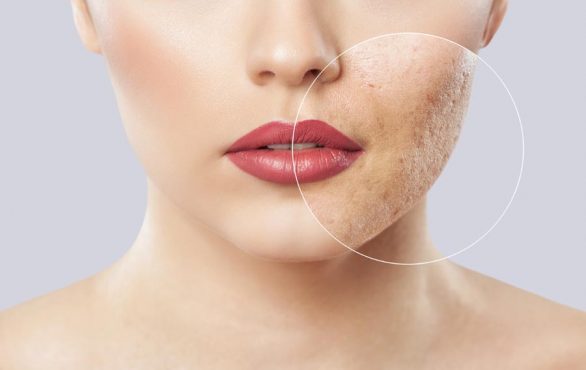
Choose the right peeler for the patient
An accurate and complete history of the patient should be taken when evaluating the patient for exfoliation. Ask questions about the history of viral infections, immunodeficiency problems, colloid formation, Xray history, nicotine use, etc.
Patients with a history of recurrent HSV infection (more than 1 case every 6 months), especially in moderate to profound exfoliation, should be treated prophylactically to prevent the spread of herpes during the exfoliation process and subsequent recovery. It is best to take Valacyclovir 500mg twice a day for up to 14 days before exfoliation. If HSV or VZV is suspected, this dose can even be increased to 6g per day (Valaciclovir 1000mg TDS). Patients with immunodeficiency problems should not have deep to moderate exfoliation, as their immunodeficiency status delays wound healing.
One of the main concerns about skin peeling is patients who have recently completed isotretinoin treatment. The usual recommendation is 6-12 months, but there is evidence that exfoliation and laser are safe after 3 months of medication. Of course, it is better to carefully assess the patient's condition. However, in case of face lift or eyebrow lift, it is recommended to do exfoliation 6-12 months after the lift operation to prevent complications.
Nicotine consumption reduces blood flow to the skin and delays healing and increases the risk of scarring.
The doctor should also perform a physical examination and pay special attention to the type of skin and the degree of damage caused by the patient's light. Skin type can be classified using the Obagi skin classification system. This skin classification system can be used to objectively assess the patient's skin and is an important tool for selecting appropriate peels. This classification system contains more information than the traditional Fitzpatrick or Glogau skin type. These five assessments are:
Color
Oiliness
Skin Thickness
Skin Laxity
Fragile Skin
Color
Patients with fair skin are less likely to develop hyperpigmentation than patients with darker skin. Patients with more stable skin pigments are at lower risk for PIH. To prevent this PIH, it is better to do a longer period of care and preparation for peeling. Hypopigmentation is also associated with skin color.
Oiliness
The quality of skin oil should also be considered. Fat is a barrier to penetration of the exfoliating solution. In addition, if the fat is not controlled, the risk of recurrence and flare-up of acne after the peeling process increases. Excess degreasing may be required to allow the exfoliating material to penetrate to the desired depth in very oily skin. If we are considering moderate to deep peels, it may take several months of systemic isotretinoin before peeling.
Skin Thickness
Patients with thin skin are at risk for re-epithelialization during peeling, especially moderate to deep peeling, due to the lack of adnexal structures. But if peeling is done well for this type of skin, it has a better response than thicker skin. Because for proper peeling and achieving stimulation of collagen and elastin production, only a medium depth peeling is needed. Patients with thicker skin, on the other hand, need a more invasive procedure to exfoliate at the right depth.
Skin Laxity
Loose skin should be distinguished from muscle relaxation. Muscle relaxation requires surgical intervention to help resuspend ptosis tissue. However, sagging skin improves with repeated regeneration of the papillary dermis. Because with this regeneration, it increases collagen, elastin and DEJ fibrils, and this increase in the material in the dermis causes the skin to tighten.
Fragile Skin
As you age, the ridges between the dermis and epidermis (rete pegs) become smoother and the amount of DEJ fibrils decreases. In this condition, the skin becomes more fragile. These patients usually have easily bruised skin and their wounds heal with delay. These symptoms get worse with age, long-term use of prednisolone and blood thinners. Frequent peeling on the surface of the papillary dermis can help reduce this skin fragility.
VERY SUPERFICIAL CHEMICAL PEELS
Although superficial exfoliation may seem ineffective, the same exfoliation improves skin texture by removing the stratum corneum, inducing regeneration of the stratum corneum, increasing the thickness of the granular layer, improving epidermal melasma, and clearing a series of sunspots through the layer. Very superficial vectorization is possible. PIH is not common in very superficial peels because there is minimal inflammation during this process.
SUPERFICIAL CHEMICAL PEELS
These peels are more effective than superficial peels for treating actinic keratoses, melasma epidermis, sun spots, and epidermal growth and repair. In this peeling, during the repair period (about a few days later), the skin suffers from erythema and scaling, which can be minimized by preparing the skin before peeling. Unlike previous exfoliators, extreme caution should be exercised in patients at risk for PIH.
Medium depth chemical peeling (MEDIUM-DEPTH CHEMICAL PEELS)
In this peeling peeling material